Haram in Islam
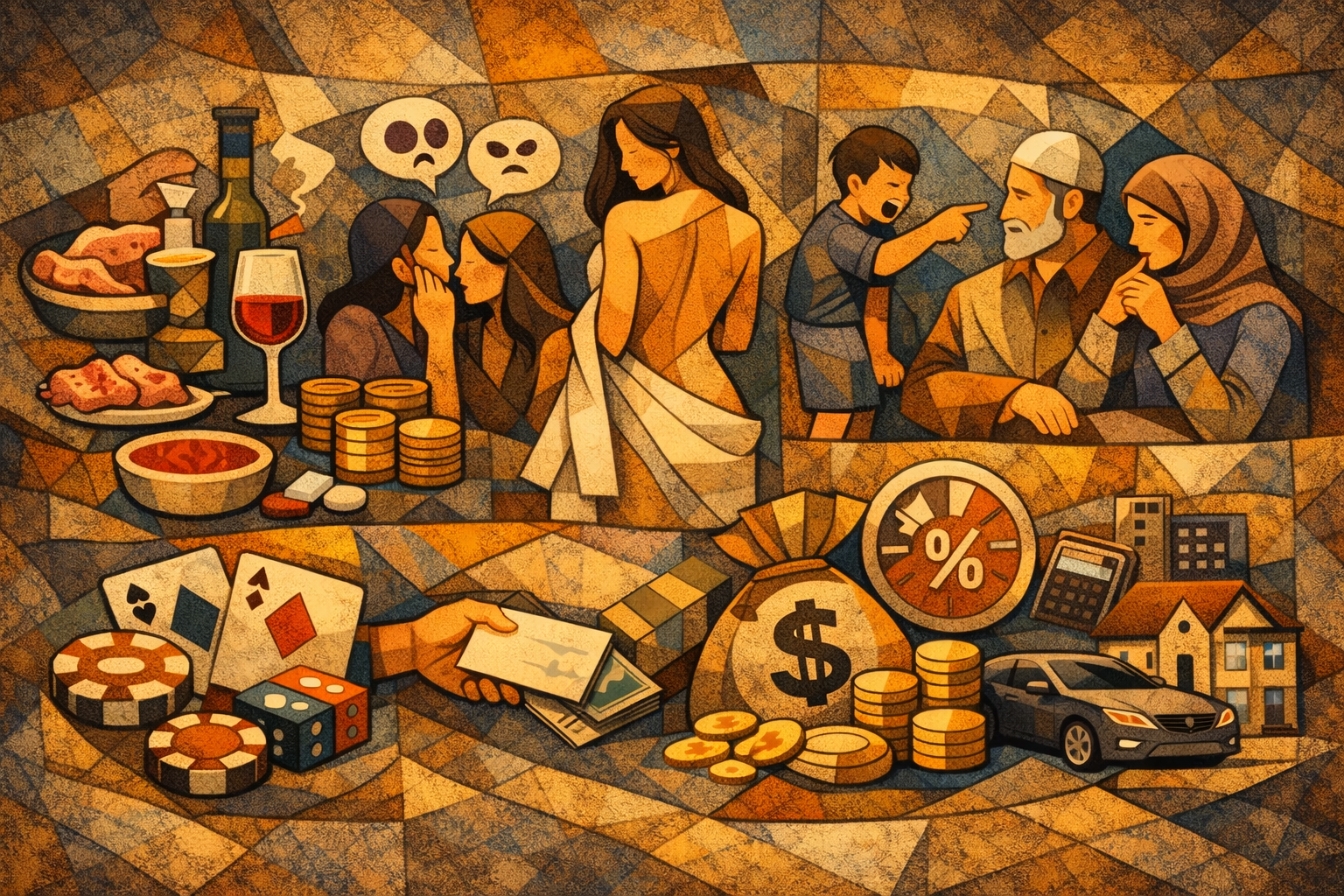
Definition
Haram (Arabic: حرام) refers to anything that is strictly prohibited in Islam. A Muslim is required to avoid haram acts as an act of obedience to Allah. Avoiding haram is part of faith, discipline, and submission.
The opposite of haram is halal (permissible).
In Islamic teachings, actions fall into five main categories:
- Fard (Obligatory) – must be done
- Mustahabb (Recommended) – rewarded if done
- Mubah (Permissible) – neutral
- Makruh (Disliked) – better to avoid
- Haram (Forbidden) – sinful if done
Principle: Only Allah Defines Haram
In Islam, only Allah has the authority to declare something haram.
“Do not falsely declare with your tongues, “This is lawful, and that is unlawful,” (only) fabricating lies against Allah. Indeed, those who fabricate lies against Allah will never succeed.”
— Qur'an 16:116
Muslims rely on two primary sources:
- The Qur'an
- The Sunnah (teachings and example of Prophet Muhammad ﷺ)
Major Haram Acts
Below are major categories of haram actions clearly prohibited in Islam.
1. Shirk (Associating Partners with Allah)
Shirk is the greatest sin in Islam. It means worshipping others besides Allah or associating partners with Him.
“Indeed, Allah does not forgive associating others with Him (in worship), but forgives anything else of whoever He wills. And whoever associates others with Allah has indeed committed a grave sin.”
— Qur'an 4:48
Examples:
- Worshipping idols
- Praying to others besides Allah
- Believing others have divine power independent of Allah
2. Murder and Causing Harm
Taking innocent life is strictly forbidden.
“Whoever kills a soul unjustly... it is as if he had killed all mankind.”
— Qur'an 5:32
Islam protects human life, dignity, and safety.
3. Theft and Dishonesty
Taking property unjustly is haram.
Examples:
- Stealing
- Fraud
- Cheating in business
- Breaking trust
Islam emphasizes honesty and fairness.
4. Zina (Illegal Sexual Relations)
Sexual relations are only permitted within marriage.
“Do not go near zina. It is an immorality and an evil way.”
— Qur'an 17:32
This includes:
- Adultery
- Fornication
- Sexual immorality
Islam protects family structure and dignity.
5. Riba (Interest / Usury)
Charging or paying interest is prohibited.
“Allah has permitted trade and forbidden riba.”
— Qur'an 2:275
Islam encourages fair trade and discourages exploitation.
6. Alcohol and Intoxicants
All intoxicants are forbidden.
“Intoxicants and gambling… are abominations from the work of Satan, so avoid them.”
— Qur'an 5:90
This includes:
- Alcohol
- Drugs
- Any substance that impairs judgment
Islam protects the mind and decision-making ability.
7. Gambling (Maysir)
Gambling is forbidden because it creates addiction, financial harm, and social problems.
Examples:
- Casino games
- Betting
- Lotteries
Islam promotes earning through honest work.
8. Consuming Pork and Certain Foods
Pork is explicitly prohibited.
“Forbidden to you is dead meat, blood, and the flesh of swine…”
— Qur'an 5:3
Also forbidden:
- Animals not slaughtered properly
- Blood
9. Lying, Backbiting, and Slander
Islam strongly prohibits harming others with words.
“Do not backbite one another.”
— Qur'an 49:12
This includes:
- Lying
- Gossip
- False accusations
Truthfulness is a core Islamic value.
10. Oppression and Injustice
Islam forbids oppression in all forms.
Examples:
- Abuse
- Exploitation
- Denying rights
- Unfair treatment
Allah commands justice and fairness.
Intentions and Accountability
In Islam, actions are judged by intentions.
A Muslim is responsible for their choices but Allah is Most Merciful.
Sins may be forgiven through sincere repentance.
Repentance (Tawbah)
Islam encourages repentance. Allah forgives those who sincerely return to Him.
Conditions of sincere repentance:
- Stop the sin
- Feel regret
- Intend not to return to it
- Correct harm done to others if possible
“Allah loves those who repent.”
— Qur'an 2:222
Wisdom Behind Haram
Haram exists to protect:
- Faith
- Life
- Intellect
- Family
- Property
- Society
Islamic law aims to benefit individuals and society.
Summary
Haram refers to actions prohibited by Allah. Muslims avoid haram to maintain faith, discipline, and moral character.
Islam teaches that obedience to Allah leads to success in this life and the next.
related topics on this website
- halal
- repentance.md
- major-sins.md
ISLAM-EDUCATION.COM